


Military life can place significant strain on relationships. Unique stressors such as frequent relocations, deployments, time apart, changing family roles and responsibilities, separation from support networks and the transition from military service can contribute to higher rates of relationship distress among military couples compared with their civilian peers.
At Cohen Veterans Network (CVN), we know that strong relationships play an important role in overall mental health and quality of life. That’s why couples therapy is a key component of the care available across our network of Cohen Clinics. New data from nearly 3,200 clients shows that evidence-based couples therapy can make a meaningful difference for military-connected couples.
The Impact of Couples Therapy on Military-Connected Couples
To better understand the utilization and effectiveness of CVN couples therapy, we analyzed aggregate data from 3,199 clients who received couples therapy services during calendar years 2024 and 2025.
Clinicians across the network primarily use evidence-based approaches including Emotionally Focused Couple Therapy (EFCT) and Gottman Method Couples Therapy. These treatments are designed to help couples improve communication, strengthen emotional connections, resolve conflict, and build healthier relationship patterns.
The analysis found that approximately one in five CVN clients participated in couples therapy during the study period, attending an average of 6.5 sessions.
Key Findings from CVN Couples Therapy Data
The data shows that military-affiliated couples who participated in couples therapy experienced meaningful improvements across several measures.
- Relationship Satisfaction Increased by 38% – On average, clients reported a 38% increase in relationship satisfaction following treatment, as measured by the Couple Satisfaction Index.
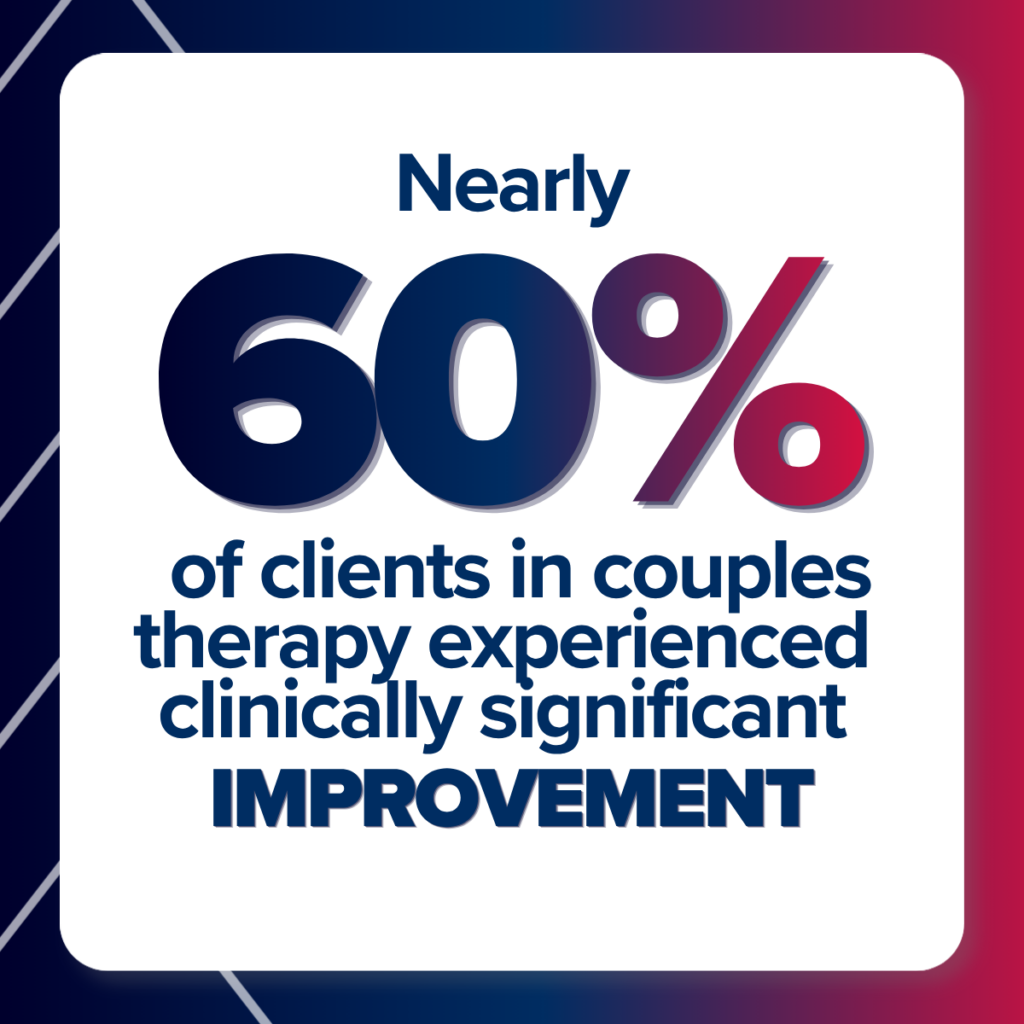
- Nearly 6 in 10 Couples Experienced Clinically Significant Improvement – Fifty-nine percent of clients experienced clinically significant improvement, meaning their relationship was no longer considered distressed following treatment.
- Quality of Life Improved by 14% – The benefits of couples therapy extended beyond the relationship itself. Clients reported an average 14% improvement in overall quality of life, measured through the Quality-of-Life Enjoyment and Satisfaction Questionnaire.
- Most Clients Achieved Their Treatment Goals – Nearly nine in 10 clients (89%) met some or all of the goals they set at the start of treatment.
Why Couples Therapy Matters for Military Families
CVN’s model is built on a promise of providing accessible, high-quality, evidence-based mental health care to veterans, active duty service members, and military families. These findings reinforce that commitment by demonstrating that couples therapy is not only widely utilized across the network but also highly effective.
Evidence-based couples therapy can help military couples strengthen their relationships, achieve meaningful treatment goals, and improve their quality of life. As military families continue to navigate the demands of military life, access to effective, culturally competent couples therapy remains an important part of supporting family well-being, resilience, and readiness.
CVN network data. Findings may not be representative of other populations or care settings.