


Depression and anxiety are among the most common mental health conditions affecting the military community. In 2026, 29% of Cohen Veterans Network’s adult clients were diagnosed with one of these conditions.
Cognitive behavioral therapy (CBT), which focuses on identifying and changing patterns of thinking and behavior, is among the evidence-based treatments CVN uses to address depression and anxiety. But how many clients improve with CBT, and how quickly does that improvement happen?
Cohen Veterans Network’s Institute for Quality (CVN-IQ) analyzed data from more than 5,500 CVN clients, examining changes in depression and anxiety symptoms using two standardized measures: the Patient Health Questionnaire-9 (PHQ-9) for depression and the Generalized Anxiety Disorder-7 (GAD-7) for anxiety.
The results show that meaningful improvement was not only common, but for many clients, it happened relatively early in treatment.
Meaningful Improvement Happens Early
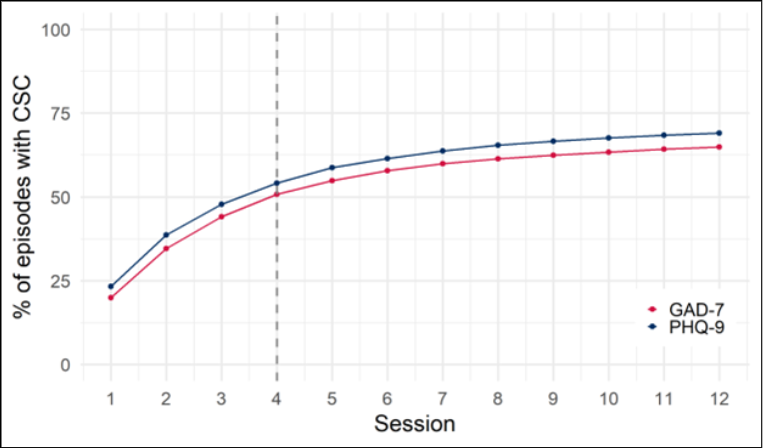
Approximately 70% of clients with elevated depression symptoms and 66% of those with elevated anxiety symptoms achieved clinically significant improvement during treatment, meaning their symptoms decreased enough that the clients experienced noticeable changes.
For many, that improvement came quickly. Among clients who achieved clinically significant improvement, 77% reached that threshold within their first four sessions. That early change occurred within a course of care that averages nine to 10 sessions for CVN clients.
Mental Health Outcomes Vary in the Military Community
The analysis also found differences in outcomes among the populations CVN serves (veterans, military members, family members). Adult family members showed greater improvement than veterans, while active-duty service members showed less improvement.
Why Early Improvement Matters
These findings demonstrate that brief, evidence-based interventions can be highly effective in addressing common mental health conditions such as depression and anxiety and that meaningful change can occur early in the course of care.
For clinicians, recognizing early or rapid symptom improvement can help inform treatment planning and clinical decision-making as care progresses.
CVN network data. Findings may not be representative of other populations or care settings.